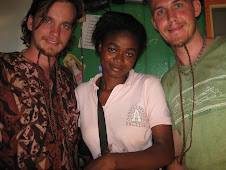
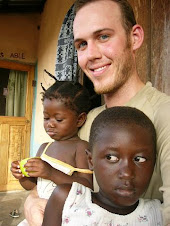
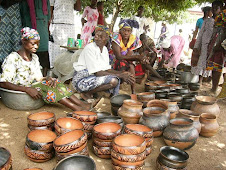
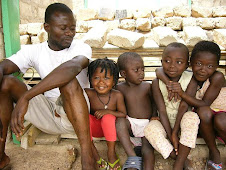
New photos on Facebook right here. Hope all is well and good with you.
peace,
-Toby
Saturday, April 25, 2009


Friday, April 24, 2009
Vacation extraviganza
That spelling of extraviganza doesn't look quite right, but oh well. I had a great vacation travels with some pcv friends here in ghana, and now i have no money. Being a tourist is Expensive!
First, Anthony, Kyle, Brian, Matt, and Tristen came up to Bolga to visit me. I went in and met them in the bus station and took them to a nice chop bar where we ate TZ and groundnut aleefu stew. It's one of my favorites and the guys from the south (all but Tristen) had never taken TZ before. It's common in northern Ghana, but you don't really see it anywhere in the south. They liked it and you will too, because aleefu is excellent. See previous post for more about Ghanaian food.
We hung out in Bolga for the day, I showed them around, but there's not really that much to see. We sat and had a beer with Shauna, JJ, and Kirsten, my omnibus neighbors. Kyle and I increased our awesome factor by a billion (see pictures). We took a walk throught the market and then headed back to my house in Sirigu. It was fun to have visitors, and I showed them around my house and school, then we went into the village and ate some snacks and took pito at Bismarks house. They were impressed with how dry and dead everything up here is, because in southern ghana it is still all green and foresty and in the Upper East it is still brown and dusty. They also enjoyed not getting mobbed and hassled by the locals. In general, the people in the north are very laid back and relaxed. They are still curious about white people, but they don't grab us or yell at us or bother us excessively. I was proud of my village and my community and my friends were impressed with my language skills when I talked with my Sirigu people in Frafra.
The next day, we got up early and saw the sights. Transport can be a challenge up here, but we got pretty lucky. We took a tro to Paga and visited the Crocodile Pond. It was still a big mudhole with crocodiles in it, and they still wanted to charge us too much, but i bargained with them and it was ok. We sat on a crocodile and then fed it a live chicken. Pretty cool. Crocodiles are pretty cool. Also in Paga, we visited an old slave camp where slaves were brought before being sold south to other slave markets and eventually to the coast. Our guide was named Aaron and he was excellent. Sometimes tourist places in Ghana are frustrating and not worth it, but the Pikworo Slave Camp in Paga is definately a winner. We walked around the camp and learned about the way it ran and saw some rocks and stuff. Highly recommended.
We took a taxi back to Bolga. The six of us (and we aren't small guys) crammed into a normal sized sedan taxi. Along the way we negotiated with the driver to take us to a town near Bolga called Tongo to see another tourist attraction. The driver was not sure about that, so we stopped in Navrongo, he talked with is brother and we switched taxis and negotiated with the brother. We made a deal for him to take us to Tongo, wait, and then take us back to Bolga. He even stopped along the way so we could get some lunch, what a guy, the drivers name was Walkalone. Cool name.
Tongo is a little village in some foothills south of Bolga. We took a tour of some interesting rock formations and caves where the locals hid during the British invasion of the region. We also met the chief wandered through his very enormous compound house. The guide had a lot to say, but we were tired and I spend most of my time making faces at little kids. Lastly, we visited a the Tenzug shrine. We climbed up a hill after our guide got permission from the head priest. The shrine is sacred and treated like an oracle; you ask it a question or tell it a problem and then sacrifice some fowls and your problem/question will be solved/answered! In order to approach the shrine, however, we had to take off our shoes, roll up our trowsers and take off all hats and shirts. It used to be a naked only shrine, they say, but now it's just a topless shrine. The actual shrine itself was a sort of cave with an old guy sitting in it and he had all sorts of animal bones and horns and a big pile of feathers from the animal sacrifices. Our guide wanted us to ask a question, so I asked the shrine to help our schools develope and for our students to be successful. They seemed to like that, and we donated some money to buy two guinea fowls to be sacrificed to the shrine for us. We didn't see the sacrifices, they said they would do it later, there weren't any guinea fowls around. Our guide told us that the sacrificed animals are usually eaten afterwards, unless the shrine says otherwise. The shrine was also to visit us in our dreams, he said, but I haven't been visited yet.
After a long day of touristing, we returned to my house and relaxed, drank and played guitar by candlelight. The next day, we visited SWOPA, the ceramics place next door to my school. After that, we traveled back into Bolga and then to Tamale, and stayed at the TSO. Beth joined us 6 guys there, she is very patient and tolerant. We played Risk and I won. Anthony and Kyle won, too.
We left the next day for Mole National Park. The bus wasn't scheduled to leave until 12:30, and it didn't actually leave until 4:00. The ride was pretty rough at the end, and we didn't get to the park until 9:00PM or so. We stayed at the fancy Mole Hotel, but the pool was closed for the night so we had to take showers instead. The next morning, we got up early and went on a guided nature hike. We were very luck to see lots of elephants right away! there were some right up by the staff quarters and we took lots of pictures. Elephants are very big, they are like dinosaurs. We hiked down into the valley and saw elephants bathing and playing and some young small ones too. We also some antelope-like hooved mammals, cob deer and bush buck, a 4 ft. monitar lizard, lots of worthogs, and crocodiles and birds. We had breakfast, swam in the pool, and had lunch and swam in the pool. Kyle and I got delicious fufu for lunch and there were baboons all around that wanted to be our friends. They were very used to people and tried to come and take our food. One baboon wanted Brian's mango, so Brian gave it too him. That made the baboon happy and Brian was happy too.
We went with another group of 'mer'cans to Larabanga to see the famous Mosque there. I'm sure the mosque is great, but when we got there, the local guides were really annoying and aggressive, so Brian, Matt, and I decided to go to a spot instead (spot=bar). Some of the others paid and saw the mosque, but Tony said it was underwhelming, and they didn't get to enter because they weren't muslim. We gave Larabanga an unenthusiastic thumbs down.
Back at Mole, we swam in the pool, relaxed, swam in the pool, watched Baboons, and Beth did laundry. We ate supper at the staff quarters because it was cheaper and they had Ghanaian food. We played Texas hold 'em and I won. I gave my winnings to Tristen because he won the night before and I owed him money. Kyle did not win. Our only option to get back to Tamale was the Mass Metro bus that left Mole at 4:00am, so that's what we did. We got back to Tamale early and had a relaxing afternoon. We played risk and Kyle won. I did not win.
Now I'm broke and ready to go back to site and relax for a month or three. I'm better versed in Ghana tourist attractions, so if you come and visit me, I know where the good ones are and I can show you. I hope everyone over yonder is doing well and keeping busy. I will post many new photos on facebook soon so you can see all the stuff I just wrote about.
Love,
-Toby
First, Anthony, Kyle, Brian, Matt, and Tristen came up to Bolga to visit me. I went in and met them in the bus station and took them to a nice chop bar where we ate TZ and groundnut aleefu stew. It's one of my favorites and the guys from the south (all but Tristen) had never taken TZ before. It's common in northern Ghana, but you don't really see it anywhere in the south. They liked it and you will too, because aleefu is excellent. See previous post for more about Ghanaian food.
We hung out in Bolga for the day, I showed them around, but there's not really that much to see. We sat and had a beer with Shauna, JJ, and Kirsten, my omnibus neighbors. Kyle and I increased our awesome factor by a billion (see pictures). We took a walk throught the market and then headed back to my house in Sirigu. It was fun to have visitors, and I showed them around my house and school, then we went into the village and ate some snacks and took pito at Bismarks house. They were impressed with how dry and dead everything up here is, because in southern ghana it is still all green and foresty and in the Upper East it is still brown and dusty. They also enjoyed not getting mobbed and hassled by the locals. In general, the people in the north are very laid back and relaxed. They are still curious about white people, but they don't grab us or yell at us or bother us excessively. I was proud of my village and my community and my friends were impressed with my language skills when I talked with my Sirigu people in Frafra.
The next day, we got up early and saw the sights. Transport can be a challenge up here, but we got pretty lucky. We took a tro to Paga and visited the Crocodile Pond. It was still a big mudhole with crocodiles in it, and they still wanted to charge us too much, but i bargained with them and it was ok. We sat on a crocodile and then fed it a live chicken. Pretty cool. Crocodiles are pretty cool. Also in Paga, we visited an old slave camp where slaves were brought before being sold south to other slave markets and eventually to the coast. Our guide was named Aaron and he was excellent. Sometimes tourist places in Ghana are frustrating and not worth it, but the Pikworo Slave Camp in Paga is definately a winner. We walked around the camp and learned about the way it ran and saw some rocks and stuff. Highly recommended.
We took a taxi back to Bolga. The six of us (and we aren't small guys) crammed into a normal sized sedan taxi. Along the way we negotiated with the driver to take us to a town near Bolga called Tongo to see another tourist attraction. The driver was not sure about that, so we stopped in Navrongo, he talked with is brother and we switched taxis and negotiated with the brother. We made a deal for him to take us to Tongo, wait, and then take us back to Bolga. He even stopped along the way so we could get some lunch, what a guy, the drivers name was Walkalone. Cool name.
Tongo is a little village in some foothills south of Bolga. We took a tour of some interesting rock formations and caves where the locals hid during the British invasion of the region. We also met the chief wandered through his very enormous compound house. The guide had a lot to say, but we were tired and I spend most of my time making faces at little kids. Lastly, we visited a the Tenzug shrine. We climbed up a hill after our guide got permission from the head priest. The shrine is sacred and treated like an oracle; you ask it a question or tell it a problem and then sacrifice some fowls and your problem/question will be solved/answered! In order to approach the shrine, however, we had to take off our shoes, roll up our trowsers and take off all hats and shirts. It used to be a naked only shrine, they say, but now it's just a topless shrine. The actual shrine itself was a sort of cave with an old guy sitting in it and he had all sorts of animal bones and horns and a big pile of feathers from the animal sacrifices. Our guide wanted us to ask a question, so I asked the shrine to help our schools develope and for our students to be successful. They seemed to like that, and we donated some money to buy two guinea fowls to be sacrificed to the shrine for us. We didn't see the sacrifices, they said they would do it later, there weren't any guinea fowls around. Our guide told us that the sacrificed animals are usually eaten afterwards, unless the shrine says otherwise. The shrine was also to visit us in our dreams, he said, but I haven't been visited yet.
After a long day of touristing, we returned to my house and relaxed, drank and played guitar by candlelight. The next day, we visited SWOPA, the ceramics place next door to my school. After that, we traveled back into Bolga and then to Tamale, and stayed at the TSO. Beth joined us 6 guys there, she is very patient and tolerant. We played Risk and I won. Anthony and Kyle won, too.
We left the next day for Mole National Park. The bus wasn't scheduled to leave until 12:30, and it didn't actually leave until 4:00. The ride was pretty rough at the end, and we didn't get to the park until 9:00PM or so. We stayed at the fancy Mole Hotel, but the pool was closed for the night so we had to take showers instead. The next morning, we got up early and went on a guided nature hike. We were very luck to see lots of elephants right away! there were some right up by the staff quarters and we took lots of pictures. Elephants are very big, they are like dinosaurs. We hiked down into the valley and saw elephants bathing and playing and some young small ones too. We also some antelope-like hooved mammals, cob deer and bush buck, a 4 ft. monitar lizard, lots of worthogs, and crocodiles and birds. We had breakfast, swam in the pool, and had lunch and swam in the pool. Kyle and I got delicious fufu for lunch and there were baboons all around that wanted to be our friends. They were very used to people and tried to come and take our food. One baboon wanted Brian's mango, so Brian gave it too him. That made the baboon happy and Brian was happy too.
We went with another group of 'mer'cans to Larabanga to see the famous Mosque there. I'm sure the mosque is great, but when we got there, the local guides were really annoying and aggressive, so Brian, Matt, and I decided to go to a spot instead (spot=bar). Some of the others paid and saw the mosque, but Tony said it was underwhelming, and they didn't get to enter because they weren't muslim. We gave Larabanga an unenthusiastic thumbs down.
Back at Mole, we swam in the pool, relaxed, swam in the pool, watched Baboons, and Beth did laundry. We ate supper at the staff quarters because it was cheaper and they had Ghanaian food. We played Texas hold 'em and I won. I gave my winnings to Tristen because he won the night before and I owed him money. Kyle did not win. Our only option to get back to Tamale was the Mass Metro bus that left Mole at 4:00am, so that's what we did. We got back to Tamale early and had a relaxing afternoon. We played risk and Kyle won. I did not win.
Now I'm broke and ready to go back to site and relax for a month or three. I'm better versed in Ghana tourist attractions, so if you come and visit me, I know where the good ones are and I can show you. I hope everyone over yonder is doing well and keeping busy. I will post many new photos on facebook soon so you can see all the stuff I just wrote about.
Love,
-Toby
Wednesday, April 15, 2009
Toby Update
I've been busy last couple of weeks. Here's the short version:
I traveled to Accra for the National VAC meeting. (Volunteer Advisory Committee) We met with Accra Staff and discussed lots of different issues from our regions. The meeting was pretty efficient and we got some things accomplished. People complained that the meeting went for 3 hours, but I don't know what they're talking about. I'm totally into 3 hour meetings if something actually happens at them. Co-op skillz! In Accra I ate pizza and a cheezeburger and really good indian food and drank and generally spent too much money. That's just how Accra is, it doesn't really seem like part of the Ghana that I know.
After Accra, I went to visit Kyle at his site because he lives close to the beach. We spent a few days swimming and being lazy at Adda Foah. Hung out with some Canadian nurses and Brits on gap year. Most other internationals I meet here are volunteering in some way or other. Often they have to pay to come to Ghana to volunteer, and usually it's for a few months at most. They are usually very impressed at what we do, it's a little more intense than their deal. We call them voluntourists. I don't look down on them though, they're nice to talk to.
I traveled back north, stopped in Kumasi and smoked a hookah with some of the new omnibus crew, then got home. The last few days of the school term were uneventful except for some entertainment we had organized for the students. Football game, and then Jams! (school dance) I danced the night away with my students, only occasionally awkward. Now school is out and I'm on holiday, which is nice.
I traveled to Tamale for Easter, had mexican food and spoke spanish to the two latina pcvs that are here. That is cool, because I don't get to use the ol' espanol much. Ana is actually from Quito, Ecuador where I studied abroad, which is cool. She uses the Quito f when she speaks! We spent lots of time watching "I'm on a boat" and listening to Miley Cyrus, it was awesome. On easter sunday, we went swimming in a pool with actual chorine! And then played ultimate frisbee. It was great.
Next week some of my teacher friends are coming up to visit me and then we are going to Mole National Park to see an elephant. We may see two. It will be lots of fun fun fun.
Obviously I'm having a good time. dancing, spanish, chorine, frisbee, elephants, what more could I ask for?
Love,
-Toby
PS. A few new pictures on facebook too.
After Accra, I went to visit Kyle at his site because he lives close to the beach. We spent a few days swimming and being lazy at Adda Foah. Hung out with some Canadian nurses and Brits on gap year. Most other internationals I meet here are volunteering in some way or other. Often they have to pay to come to Ghana to volunteer, and usually it's for a few months at most. They are usually very impressed at what we do, it's a little more intense than their deal. We call them voluntourists. I don't look down on them though, they're nice to talk to.
I traveled back north, stopped in Kumasi and smoked a hookah with some of the new omnibus crew, then got home. The last few days of the school term were uneventful except for some entertainment we had organized for the students. Football game, and then Jams! (school dance) I danced the night away with my students, only occasionally awkward. Now school is out and I'm on holiday, which is nice.
I traveled to Tamale for Easter, had mexican food and spoke spanish to the two latina pcvs that are here. That is cool, because I don't get to use the ol' espanol much. Ana is actually from Quito, Ecuador where I studied abroad, which is cool. She uses the Quito f when she speaks! We spent lots of time watching "I'm on a boat" and listening to Miley Cyrus, it was awesome. On easter sunday, we went swimming in a pool with actual chorine! And then played ultimate frisbee. It was great.
Next week some of my teacher friends are coming up to visit me and then we are going to Mole National Park to see an elephant. We may see two. It will be lots of fun fun fun.
Obviously I'm having a good time. dancing, spanish, chorine, frisbee, elephants, what more could I ask for?
Love,
-Toby
PS. A few new pictures on facebook too.
Support the STARS Conference
Each year, PCVs in Ghana plan and organize and leadership conference called STARS for Senior High students. Each volunteer brings one boy and one girl student to the week long conference so that they can attend workshops and lectures from successful Ghanaians, learn important skills and topics, and meet other motivated students from across the country. I am hoping to bring students from my school to this years conference in June. Although I am not working on the planning for the event, many other hardworking PCVs are. We get a variety of sponsorships from different organizations in Ghana, but the more funds we have available, the bigger and better the conference can be. Please help if you can by donating something small to help us help ours stars in Ghana. Below is a letter with more information from Kim, the Coordinator for the conference.
Dear one and all,
Greetings once again from Ghana! The STARS Conference project has now been APPROVED for funding. The next part is up to you! As you all know (some of you from first-hand experience!) STARS is an awesome annual conference for secondary school kids. We each bring our best and brightest for a week-long youth leadership camp. It is an amazing experience that I believe is changing lives for the better. Some of these kids have never travelled outside their home region before. We give them a chance to come together for a week of activities with their peers, interacting with Ghanaian guest speakers who have succeeded in their lives.
If you want to see more info about last year's conference, you can check out the website or blog:
http://starsconference.blogspot.com/ or www.starsconference.com (which might be having technical trouble right now...bear with me!).
Of course, this doesn't all happen magically--it takes time, money, and plenty of "sweat equity" as we run around Ghana securing donations from Ghana corporate sponsors, planning the agenda, lining up guest speakers, etc. This year, we also decided to apply for Peace Corps Partership Program (PCPP) number so that our loved ones in the states can donate money to the project tax free. If you make a donation, I personally guarantee that 100% of your funds will go to this worthwhile project. Click on this link to donate!
https://www.peacecorps.gov/index.cfm?shell=resources.donors.contribute.projDetail&projdesc=641-261 (If the link doesn't work, go to www.peacecorps.gov, then click on "Donate Now", then "Donate to Volunteer Projects", then search for Ghana, then you'll see my project (K. Weaver / S. Safavi).
I've heard the website is manually updated so if it's down, PLEASE PLEASE keep trying. We have to have the project "filled" by the end of April. Even $5 will help us a lot. In case you are wondering what your donation will be used to buy, here are some ideas:
$5 will provide 3 good meals, a snack, and housing for a student for one day of the conference. $10 will allow us to give an "HIV Peer Educator Kit" to the students so they can take what they've learned back to their schools--and thus reach hundreds of students.
$20 will allow us to pay for transportation for a student from a remote village school to and from the conference site.
Anything at all you are willing to donate would be much appreciated by me, the other volunteers working on the project, and of course, the kids who get to have this amazing experience. If you have any questions, send me an email!
Warmly, Kim
Anything you can do to help us out would be great. Thanks in advance to you all.
Love,
-Toby
Dear one and all,
Greetings once again from Ghana! The STARS Conference project has now been APPROVED for funding. The next part is up to you! As you all know (some of you from first-hand experience!) STARS is an awesome annual conference for secondary school kids. We each bring our best and brightest for a week-long youth leadership camp. It is an amazing experience that I believe is changing lives for the better. Some of these kids have never travelled outside their home region before. We give them a chance to come together for a week of activities with their peers, interacting with Ghanaian guest speakers who have succeeded in their lives.
If you want to see more info about last year's conference, you can check out the website or blog:
http://starsconference.blogspot.com/ or www.starsconference.com (which might be having technical trouble right now...bear with me!).
Of course, this doesn't all happen magically--it takes time, money, and plenty of "sweat equity" as we run around Ghana securing donations from Ghana corporate sponsors, planning the agenda, lining up guest speakers, etc. This year, we also decided to apply for Peace Corps Partership Program (PCPP) number so that our loved ones in the states can donate money to the project tax free. If you make a donation, I personally guarantee that 100% of your funds will go to this worthwhile project. Click on this link to donate!
https://www.peacecorps.gov/index.cfm?shell=resources.donors.contribute.projDetail&projdesc=641-261 (If the link doesn't work, go to www.peacecorps.gov, then click on "Donate Now", then "Donate to Volunteer Projects", then search for Ghana, then you'll see my project (K. Weaver / S. Safavi).
I've heard the website is manually updated so if it's down, PLEASE PLEASE keep trying. We have to have the project "filled" by the end of April. Even $5 will help us a lot. In case you are wondering what your donation will be used to buy, here are some ideas:
$5 will provide 3 good meals, a snack, and housing for a student for one day of the conference. $10 will allow us to give an "HIV Peer Educator Kit" to the students so they can take what they've learned back to their schools--and thus reach hundreds of students.
$20 will allow us to pay for transportation for a student from a remote village school to and from the conference site.
Anything at all you are willing to donate would be much appreciated by me, the other volunteers working on the project, and of course, the kids who get to have this amazing experience. If you have any questions, send me an email!
Warmly, Kim
Anything you can do to help us out would be great. Thanks in advance to you all.
Love,
-Toby
Thursday, March 26, 2009
Cell phones but no lights?
Hey all,
So almost everyone in Ghana it seems has a cell phone. There are about four major companies competing and service is pretty much available everywhere, even in remote little villages like Sirigu. It is all pay as you go, that is, you buy units and add them to your phone, then as you make calls the units get used up. The prices are pretty good and there are lots of different kinds of phones around, some very fancy. Mine isn't fancy, but it has an excellent feature: It has a flashlight built into it. This is particularly useful for me because my house doesn't have electricity. In small villages like mine, most people do not have electricity in their houses. Also to note: roads are not paved, no piped water, outdoor toilets only (mine is actually inside, but with no water, I have to use a bucket to flush), and overall poverty compared with the standard of living you are probably used to.
So why this apparent paradox? Ladies selling food off their heads in the market have cell phones? It's just an example of the success of private enterprise, I guess. The cell phone companies are all private and competing, so the quality and availability of the service is pretty good. There are cell towers all over Ghana, there's one in Sirigu and one in Kandiga (where Shauna lives, 20 min bike away). Advertising campaigns have convinced people that they should have a mobile phone, so some eat poorly or little and wear broken flipflops in order to buy phone units. It's just the way it goes. Of course to charge your phone, you take it to your friend who has lights. Electricity and water are controlled by the National Government, and seem much slower to develope and extend service, although it is coming. We may get water and power to the school by next year if we are lucky. The students would like that...
I suppose cell phones are getting more and more common now in the US. How about it? Does every junior high school kid have his own cell? My students can't bring theirs to school, and if they do they get confiscated. I'm always looking for a new phone, I tell them.
One other note. The technology is here, but the culture and ethics of mobile phones is a bit different here. It is not uncommon for someone to answer their phone during a meeting, or interrupt you to talk on the phone. Ghanaians listen to music on their phones a lot, many have mp3 or radios in them. Also, because there is no voice mail, someone may call you repeatedly when you don't answer, like 15 times in a row. That's not an exaggeration. It's usually just better to answer since they probably only want to greet you and talk for a minute or two about your dog. oh well.
And the dog: sorry to let you all know that Kraman Baa has died. It happened a little while ago, and I was avoiding telling everyone at home. I was sad, but now I'm okay. She had been sick, and then one day she went up to the big kennel in the sky. I asked Robert and he said that dogs can't go to Heaven because animals have no souls. I'm not worried. I decided to give Kraman Baa a traditional Ghanaian dog funeral. Ask if you really want to know what that means.
Love to all,
-Toby
So almost everyone in Ghana it seems has a cell phone. There are about four major companies competing and service is pretty much available everywhere, even in remote little villages like Sirigu. It is all pay as you go, that is, you buy units and add them to your phone, then as you make calls the units get used up. The prices are pretty good and there are lots of different kinds of phones around, some very fancy. Mine isn't fancy, but it has an excellent feature: It has a flashlight built into it. This is particularly useful for me because my house doesn't have electricity. In small villages like mine, most people do not have electricity in their houses. Also to note: roads are not paved, no piped water, outdoor toilets only (mine is actually inside, but with no water, I have to use a bucket to flush), and overall poverty compared with the standard of living you are probably used to.
So why this apparent paradox? Ladies selling food off their heads in the market have cell phones? It's just an example of the success of private enterprise, I guess. The cell phone companies are all private and competing, so the quality and availability of the service is pretty good. There are cell towers all over Ghana, there's one in Sirigu and one in Kandiga (where Shauna lives, 20 min bike away). Advertising campaigns have convinced people that they should have a mobile phone, so some eat poorly or little and wear broken flipflops in order to buy phone units. It's just the way it goes. Of course to charge your phone, you take it to your friend who has lights. Electricity and water are controlled by the National Government, and seem much slower to develope and extend service, although it is coming. We may get water and power to the school by next year if we are lucky. The students would like that...
I suppose cell phones are getting more and more common now in the US. How about it? Does every junior high school kid have his own cell? My students can't bring theirs to school, and if they do they get confiscated. I'm always looking for a new phone, I tell them.
One other note. The technology is here, but the culture and ethics of mobile phones is a bit different here. It is not uncommon for someone to answer their phone during a meeting, or interrupt you to talk on the phone. Ghanaians listen to music on their phones a lot, many have mp3 or radios in them. Also, because there is no voice mail, someone may call you repeatedly when you don't answer, like 15 times in a row. That's not an exaggeration. It's usually just better to answer since they probably only want to greet you and talk for a minute or two about your dog. oh well.
And the dog: sorry to let you all know that Kraman Baa has died. It happened a little while ago, and I was avoiding telling everyone at home. I was sad, but now I'm okay. She had been sick, and then one day she went up to the big kennel in the sky. I asked Robert and he said that dogs can't go to Heaven because animals have no souls. I'm not worried. I decided to give Kraman Baa a traditional Ghanaian dog funeral. Ask if you really want to know what that means.
Love to all,
-Toby
Sunday, March 22, 2009
Food!
I'll tell y'all a little about the traditional foods that people eat around here. Around here is northern Ghana, specifically the Upper East Region, because that's what I know and that's where I am. Other parts of the country do it a little differently, and the southern half of the country is significantly different culturally and culinarily, but you'll get the idea.
Ingredients are fairly limited around here, so people make due with what they have. A basic meal is usually made up of a dense carbohydrate and a vegetable based stew or soup. Basic ingredients available: tomatoes, onions, garlic, ginger, oil, groundnuts (that's peanuts), okra, peppe (little, very hot peppers). Another ingredient that is in most things is maggi cubes (commercial bullion seasoning) but I don't use that much.
The most typically northern food is called TZ (pronounced Tee Zed), which stands for "Toa Zhafi", the name in Hausa (widely spoken west african langauge). In Frafra, the food is called "sagebo" (pronounced sah-gay-boh. TZ is made from flour and water and can be made of maize, millet, or wheat flour. I like the maize TZ the best, and that's the kind that Robert makes most often, and is teaching me to make. Water is mixed with a small amount of flour and heated to boiling. Some of the flour water is removed and then lots of flour is added to the pot. Stirring continuously, the watery mixture is added a little at a time to make a thick cream-of-wheat consistancy. You have to stir constantly or it will burn, so it is cooked on the ground. Specially made metal hooks are put through the handles of the thick cast aluminium pot and the ends of the hooks are held with the feet, to keep the pot steady. Both hands are used to stir with a big wooden spoon/paddle. When the TZ is ready and the right thickness, it is poured into bowls and plates and allowed to cool. As it cools, it gets thicker and thicker until it can be eaten by breaking pieces off the main lump. It reminds me of semi solid cream-of-wheat cereal. It can also be made with slightly fermented flour water, or boiled seeds and tree bark can be added for a certain flavor that I don't really like.
When you eat it, you use your hands, of course, and only your right hand. I break off pieces of TZ and dip/scoop up some soup to go with it. TZ is best with okra stew or groundnut with Aleefu stew. Both of these are tomatoe based, with onion, peppe, and oil, okra strew has boiled cut up okra, which becomes very slimy and stringy. It's kind of like snot, and takes some getting used to. Okra stew is mostly only eated with TZ. Aleefu is a leaf (looks similar to a maple leaf) that is boiled and is similar to spinach when cooked. Canned fish is sometimes added to this one. Groundnut paste (peanut butter? it's not butter!) is added to make the soup smooth and creamy. Yum!
Rice balls are made by stirring rice cooked with a little extra water. It becomes a thick paste that is then made into balls (tennis to soft sized) and allowed to cool. It is eaten the same way as TZ with groundnut soup.
Banku is fermented corn dough formed into balls and eaten with the hands along with light soup or sometimes okra stew. Kenke is also fermented corn dough that is wrapped in corn husks (Gaa kenke) or plantain leaves (Fanti kenke) and boiled for some time. The names refer to the tribes that originally made them, but they are both common here and neither tribe is from the north. Kenke is eaten with a bit of tomanto stew or some peppe sauce (like salsa). Fufu is made by pounding boiled cassava, plantain, yam, or a combination of two until it becomes a dense sticky doughy lump. Fufu isn't northern, but people make it here sometimes. It's usually eaten with light soup, which is (as the name implies) a light tomato-based soup with plenty of oil and peppe.
Along with these foods, rice is very common: Plain rice with tomanto-vegetable stew, fried rice with a few veggies in it, and jolloff rice (rice cooked in a spicy tomato-fish sauce). Chicken, fish, or meat (usually goat) is normally offered as well. If you go to chop bar (food stand on the street) they may give you some "salad" with your rice which consists of shredded cabbage and lettuce, carrots, green peppers and some mayonaise-ish salad cream.
At home, when I cook "ghanaian" or when Robert cooks, we have rice and stew, TZ, and rice balls most of the time. When I cook for myself, I tend to make some variation on macaroni and cheese.
I'm eating well and enjoying the food here. An interesting note on "table manners": very different expectations here. When you eat with your hands, you naturally tend to hunch over your bowl. In Ghana, it is seen as rude to talk during a meal and very rude to reach into a communal bowl with your left hand. Also, you always bring food to your mouth with your right hand.
Try this next time you are eating with tolerant people. A rice dish is a good one to practice with: Hunch over your plate and put your left hand in your lap. Wash your right hand and put your right elbow on the table so that you can reach your food with your hand. Mix your food around and play with it a little (eating has now become a tactile experience!). Pick up some rice in your hand and hold it on your last three fingers. If you want, you can squeeze it to keep it together. Cock your wrist so that your last three fingers point towards your mouth and act like a spoon. Put the food in your mouth, push it off your fingers with your thumb. Lick your fingers often. You can eat anything this way, but if it is a very thin soup, just pick up the bowl and drink it after you've finished your TZ.
Food is fun, and I look forward to cooking and eating Ghanaian food with you, my loved ones, when next we meet. Take care of yourselves and eat well.
Love,
-Toby
Ingredients are fairly limited around here, so people make due with what they have. A basic meal is usually made up of a dense carbohydrate and a vegetable based stew or soup. Basic ingredients available: tomatoes, onions, garlic, ginger, oil, groundnuts (that's peanuts), okra, peppe (little, very hot peppers). Another ingredient that is in most things is maggi cubes (commercial bullion seasoning) but I don't use that much.
The most typically northern food is called TZ (pronounced Tee Zed), which stands for "Toa Zhafi", the name in Hausa (widely spoken west african langauge). In Frafra, the food is called "sagebo" (pronounced sah-gay-boh. TZ is made from flour and water and can be made of maize, millet, or wheat flour. I like the maize TZ the best, and that's the kind that Robert makes most often, and is teaching me to make. Water is mixed with a small amount of flour and heated to boiling. Some of the flour water is removed and then lots of flour is added to the pot. Stirring continuously, the watery mixture is added a little at a time to make a thick cream-of-wheat consistancy. You have to stir constantly or it will burn, so it is cooked on the ground. Specially made metal hooks are put through the handles of the thick cast aluminium pot and the ends of the hooks are held with the feet, to keep the pot steady. Both hands are used to stir with a big wooden spoon/paddle. When the TZ is ready and the right thickness, it is poured into bowls and plates and allowed to cool. As it cools, it gets thicker and thicker until it can be eaten by breaking pieces off the main lump. It reminds me of semi solid cream-of-wheat cereal. It can also be made with slightly fermented flour water, or boiled seeds and tree bark can be added for a certain flavor that I don't really like.
When you eat it, you use your hands, of course, and only your right hand. I break off pieces of TZ and dip/scoop up some soup to go with it. TZ is best with okra stew or groundnut with Aleefu stew. Both of these are tomatoe based, with onion, peppe, and oil, okra strew has boiled cut up okra, which becomes very slimy and stringy. It's kind of like snot, and takes some getting used to. Okra stew is mostly only eated with TZ. Aleefu is a leaf (looks similar to a maple leaf) that is boiled and is similar to spinach when cooked. Canned fish is sometimes added to this one. Groundnut paste (peanut butter? it's not butter!) is added to make the soup smooth and creamy. Yum!
Rice balls are made by stirring rice cooked with a little extra water. It becomes a thick paste that is then made into balls (tennis to soft sized) and allowed to cool. It is eaten the same way as TZ with groundnut soup.
Banku is fermented corn dough formed into balls and eaten with the hands along with light soup or sometimes okra stew. Kenke is also fermented corn dough that is wrapped in corn husks (Gaa kenke) or plantain leaves (Fanti kenke) and boiled for some time. The names refer to the tribes that originally made them, but they are both common here and neither tribe is from the north. Kenke is eaten with a bit of tomanto stew or some peppe sauce (like salsa). Fufu is made by pounding boiled cassava, plantain, yam, or a combination of two until it becomes a dense sticky doughy lump. Fufu isn't northern, but people make it here sometimes. It's usually eaten with light soup, which is (as the name implies) a light tomato-based soup with plenty of oil and peppe.
Along with these foods, rice is very common: Plain rice with tomanto-vegetable stew, fried rice with a few veggies in it, and jolloff rice (rice cooked in a spicy tomato-fish sauce). Chicken, fish, or meat (usually goat) is normally offered as well. If you go to chop bar (food stand on the street) they may give you some "salad" with your rice which consists of shredded cabbage and lettuce, carrots, green peppers and some mayonaise-ish salad cream.
At home, when I cook "ghanaian" or when Robert cooks, we have rice and stew, TZ, and rice balls most of the time. When I cook for myself, I tend to make some variation on macaroni and cheese.
I'm eating well and enjoying the food here. An interesting note on "table manners": very different expectations here. When you eat with your hands, you naturally tend to hunch over your bowl. In Ghana, it is seen as rude to talk during a meal and very rude to reach into a communal bowl with your left hand. Also, you always bring food to your mouth with your right hand.
Try this next time you are eating with tolerant people. A rice dish is a good one to practice with: Hunch over your plate and put your left hand in your lap. Wash your right hand and put your right elbow on the table so that you can reach your food with your hand. Mix your food around and play with it a little (eating has now become a tactile experience!). Pick up some rice in your hand and hold it on your last three fingers. If you want, you can squeeze it to keep it together. Cock your wrist so that your last three fingers point towards your mouth and act like a spoon. Put the food in your mouth, push it off your fingers with your thumb. Lick your fingers often. You can eat anything this way, but if it is a very thin soup, just pick up the bowl and drink it after you've finished your TZ.
Food is fun, and I look forward to cooking and eating Ghanaian food with you, my loved ones, when next we meet. Take care of yourselves and eat well.
Love,
-Toby
Saturday, March 14, 2009
More photos and stuff
photos on facebook, now with captions!
I saw an abyssinian roller the other day. beautiful. use google image search to find a better picture than i could ever take.
Anthony, another PCV in the Western Region told me that he saw one of his students wearing a SPASH 2002 t shirt. Amazing, that's even the year I graduated. Cloths from the US that no one wants in the thrift stores gets bundled up and sent to Africa. Here, people call it "obruni wayru" which means "dead white man's cloths". That's because people think the only reason some would get rid good cloths is if they died. I see people wearing all kinds of strange second hand clothes, mostly they have no idea what the thing means. I've seen some pretty funny ones too, like an old man wearing a pink shirt that says "That's Miss Bitch to You!" or a housewife wearing "Eat, Sleep, Fish" Shirts with other people's names on them are popular too. I guess that's true in the US as well.
Happy St. Patties day coming up. I celebrated this weekend with some Irish volunteers in Navrongo, Mary and Sarah. They sang Irish songs and taught us an Irish dance and Mary played a tune on a tin whistle, an Irish instrument. It was lots of fun. We drank and danced a lot.
Happy birthday, mom. I love you.
-Toby
I saw an abyssinian roller the other day. beautiful. use google image search to find a better picture than i could ever take.
Anthony, another PCV in the Western Region told me that he saw one of his students wearing a SPASH 2002 t shirt. Amazing, that's even the year I graduated. Cloths from the US that no one wants in the thrift stores gets bundled up and sent to Africa. Here, people call it "obruni wayru" which means "dead white man's cloths". That's because people think the only reason some would get rid good cloths is if they died. I see people wearing all kinds of strange second hand clothes, mostly they have no idea what the thing means. I've seen some pretty funny ones too, like an old man wearing a pink shirt that says "That's Miss Bitch to You!" or a housewife wearing "Eat, Sleep, Fish" Shirts with other people's names on them are popular too. I guess that's true in the US as well.
Happy St. Patties day coming up. I celebrated this weekend with some Irish volunteers in Navrongo, Mary and Sarah. They sang Irish songs and taught us an Irish dance and Mary played a tune on a tin whistle, an Irish instrument. It was lots of fun. We drank and danced a lot.
Happy birthday, mom. I love you.
-Toby
Subscribe to:
Posts (Atom)